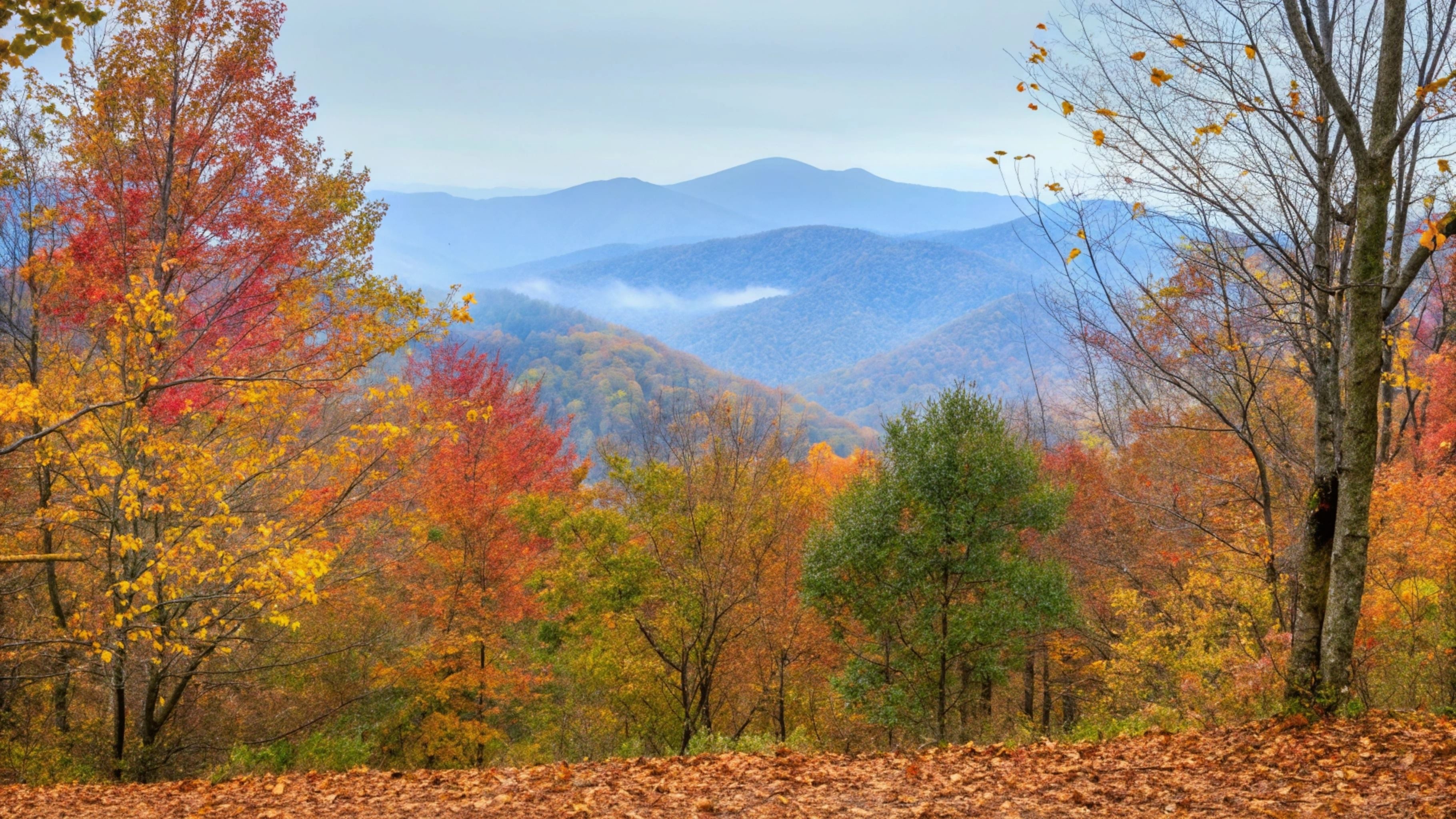
One of the best things about staying in the Smoky Mountains is having Great Smoky Mountains National Park right nearby. The park is open 24 hours a day, 365 days a year, and there is no entrance fee. However, individual roads, trails, campgrounds, and facilities may close because of weather, maintenance, construction, or seasonal conditions.
Especially during fall, always check the National Park Service alerts the morning of your visit rather than relying only on Google Maps or an itinerary you made weeks earlier.
Hiking in the Smokies
The park has hundreds of miles of hiking trails, ranging from easy riverside walks to challenging mountain hikes.
Popular hikes include:
* Alum Cave Trail — one of the most iconic Smokies hikes, with Arch Rock, mountain views, and Alum Cave Bluff.
* Trillium Gap Trail / Grotto Falls — famous for the waterfall you can actually walk behind.
* Porters Creek Trail — beautiful forest scenery, wildflowers in spring, streams, and historic sites.
* Ramsey Cascades — a much more strenuous hike leading to one of the park’s tallest waterfalls.
* Gatlinburg Trail — an easier trail beginning near Gatlinburg and one of only two park trails where dogs are permitted.
* Oconaluftee River Trail — another relatively easy riverside walk and the park’s second dog-friendly hiking trail.
Trail conditions can change quickly after storms, high winds, flooding, or maintenance work, so check current conditions before leaving your cabin.
When Should You Go?
For the easiest parking and fewer crowds, go early in the morning whenever possible.
During fall foliage season, summer weekends, and holiday periods, popular areas can become extremely busy by late morning. An early start also gives you better chances of seeing wildlife and generally cooler hiking temperatures.
Late afternoon can also be beautiful, but make sure you know the approximate sunset time and allow enough time to return before dark.
Traveling With a Dog?
This is one of the most important things visitors often don’t realize:
Dogs are not permitted on most hiking trails in Great Smoky Mountains National Park.
Dogs are allowed in:
* Campgrounds
* Picnic areas
* Along roads
* Gatlinburg Trail
* Oconaluftee River Trail
Dogs must be kept on a leash no longer than 6 feet.
So if you’re bringing your dog on your Smoky Mountain vacation, plan your National Park days carefully. You can absolutely enjoy the park with your pet, but most of the famous waterfall and mountain trails will need to be explored without them.
Parking: Yes, You Need a Parking Tag
There is no entrance fee to Great Smoky Mountains National Park, but if you park for more than 15 minutes, you need a parking tag.
2026 parking-tag prices:
Daily — $5
Weekly — $15
Annual — $40
The tag is associated with your vehicle and does not guarantee a parking space.
That last part matters.
During peak fall weekends and at popular trailheads, you can have a parking tag and still struggle to find somewhere to park. This is another reason we recommend visiting popular areas early.
Cades Cove
Cades Cove is one of the most popular areas of the park and is especially good for guests who want beautiful scenery and wildlife without doing a major hike.
The 11-mile one-way loop road passes historic cabins, churches, open fields, mountain scenery, and areas where visitors frequently see deer, wild turkeys, and black bears.
Don’t think of it as a quick 11-mile drive.
During busy periods, Cades Cove can easily take 2–4 hours or longer because of traffic and wildlife stops.
The loop is generally open from sunrise until sunset.
From May through September, Wednesdays are vehicle-free days, allowing pedestrians and bicyclists to enjoy the loop without regular automobile traffic.
Black Bears: What Visitors Need to Know
Seeing a black bear can be one of the highlights of a Smoky Mountain vacation, but remember that these are wild animals.
Stay at least 50 yards / 150 feet away from bears.
Never feed a bear or intentionally approach one for a photograph.
Food, trash, pet food, coolers, and other scented items should be secured properly, including at your vacation rental and inside your vehicle.
And yes — lock your vehicle. Bears in the Smokies have learned that cars can sometimes contain food.
Roads and Seasonal Closures
The National Park itself remains open year-round, but not every road stays open year-round.
Seasonal mountain roads and motor trails can close because of winter conditions, maintenance, construction, storms, fallen trees, or other issues.
For fall 2026, some areas also have scheduled closures or temporary restrictions. The information we saved included:
* Kuwohi Road — seasonal schedule extending through approximately November 29.
* Roaring Fork Motor Nature Trail — seasonal schedule through approximately November 29.
* Mingus Mill — temporary closure noted.
* Carlos Campbell Overlook — temporary closure noted.
* A temporary Roaring Fork closure on September 24 from 7 AM–4 PM was also posted.
Because these can change, treat this as planning information rather than a guarantee and check the National Park Service alerts shortly before visiting.
A Few Important Park Rules
A few rules surprise first-time visitors:
No drones. Recreational drone use is prohibited inside the National Park.
Don’t feed wildlife. This includes bears, deer, squirrels, and other animals.
Leave plants, rocks, historic objects, and natural items where you find them.
Follow posted parking restrictions — having a parking tag doesn’t allow parking outside designated areas.
And don’t rely entirely on cell service. Coverage can disappear quickly once you enter mountainous areas of the park, so download maps or directions ahead of time.
Before You Leave Your Cabin
For the easiest National Park day, check:
Weather → Road closures → Trail conditions → Parking → Sunset time
Bring water, comfortable walking shoes, layers, and rain protection. Weather in the mountains can be very different from the weather at your cabin or in Gatlinburg.
And don’t try to fit the entire Smokies into one day. Sometimes the best experience is choosing one hike, one scenic drive, and one place to stop and enjoy the mountains instead of racing from attraction to attraction.